
Humanitære kriser er på et historisk høyt nivå, og behovet for innovasjon i hjelpearbeidet har aldri vært større. Digitale teknologier kan bidra til å styrke responsen, men i komplekse og ressurskrevende omgivelser er implementeringen ofte en stor utfordring.
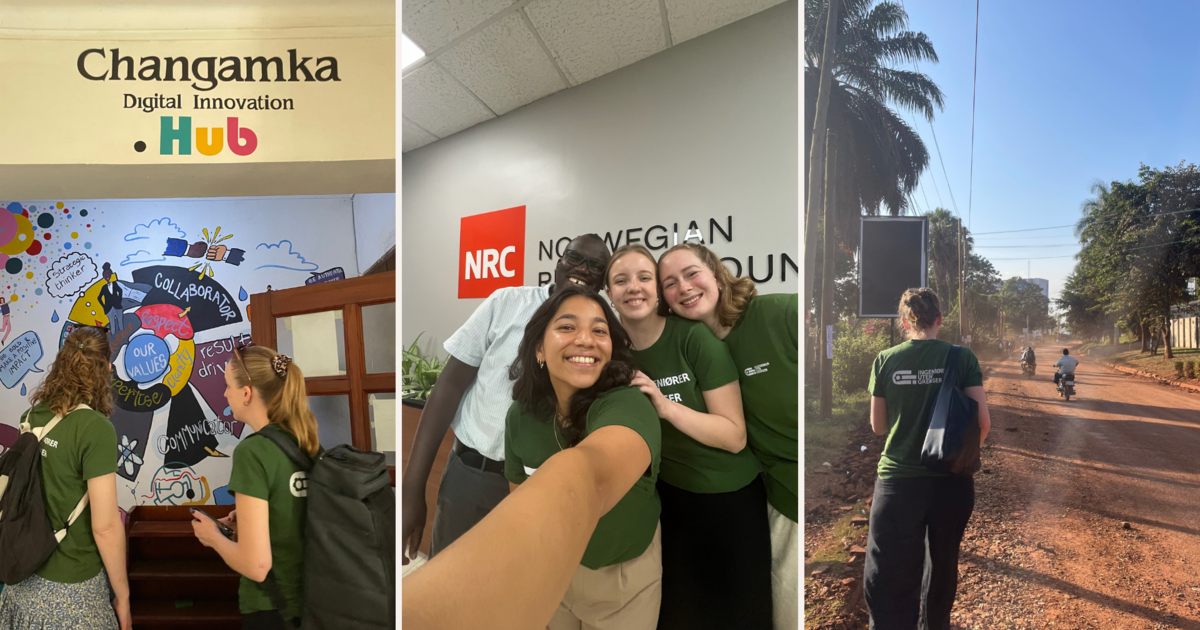
Master med Mening-studentene Branny Lin og Ragnhild Bodsberg, har med støtte fra sin IUG-mentor Nellie Sofie Body, undersøkt hvordan Norwegian Refugee Council (NRC) i Uganda har lykkes med å ta i bruk Digital Community Hubs (DCH) – et verktøy for toveis kommunikasjon mellom fordrevne lokalsamfunn og NRC. I februar 2025 var de i Uganda for å gjennomføre sitt feltarbeid. Studien viser at suksessen i Uganda ikke bare handler om teknologi, men om en entreprenøriell respons preget av initiativ, kreativitet og eierskap.
Forskningen identifiserer hvilke deler av denne responsen som kan overføres til andre NRC-kontorer, og hvilke som er knyttet til den lokale konteksten. Erfaringene fra Uganda gir viktig læring for hvordan digital transformasjon kan styrkes i organisasjonen som helhet.
Kjernen i prosjektet er at digital transformasjon ikke bare handler om teknologi, men like mye om menneskene og rammene som muliggjør meningsfull bruk av den.
Ønsker du å lese masteroppgaven eller sammendraget kan denne lastes ned i menyen til høyre.
Meaningful Masters: Digital Transformation in the Humanitarian Sector
Humanitarian crises are at a historic high, and the need for innovation in aid work has never been greater. Digital technologies can help strengthen the response, but in complex and resource-demanding environments, implementation is often a major challenge.
Meaningful Master’s students Branny Lin and Ragnhild Bodsberg, with support from their EWB-mentor Nellie Sofie Body, have studied how the Norwegian Refugee Council (NRC) in Uganda has successfully adopted Digital Community Hubs (DCH) – a tool for two-way communication between displaced communities and NRC. In February 2025, they traveled to Uganda to conduct their fieldwork. The study shows that NRC Uganda’s success is not only about technology, but also about an entrepreneurial response characterized by initiative, creativity, and ownership.
The research identifies which aspects of this response can be transferred to other NRC country offices, and which are tied to the local context. The experiences from Uganda provide important learning for how digital transformation can be strengthened across the organization.
At its core, the project highlights that digital transformation is not only about technology, but equally about the people and the conditions that enable meaningful use of it.
If you would like to read the master’s thesis or the summary, it can be downloaded from the menu on the right.
